
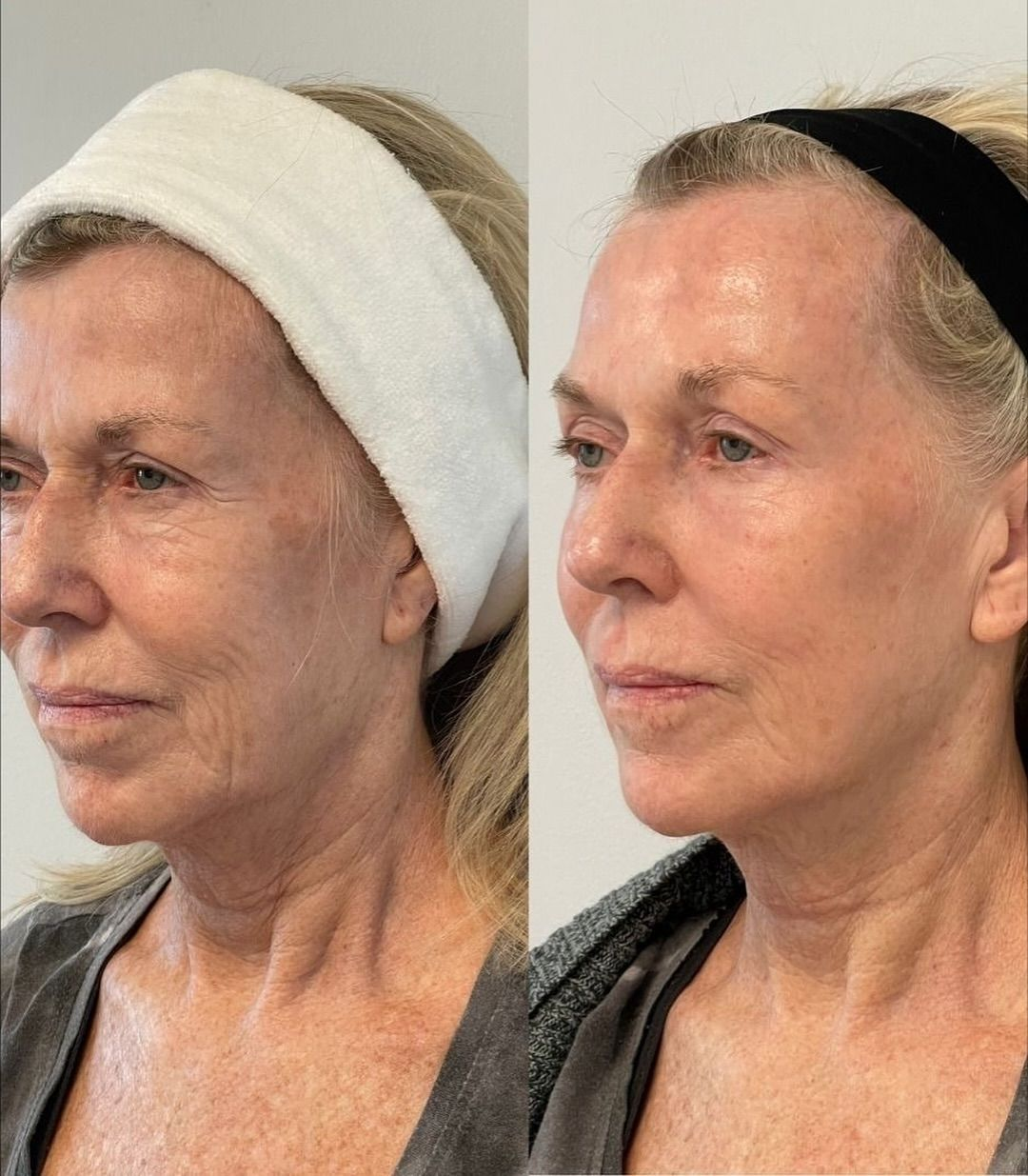
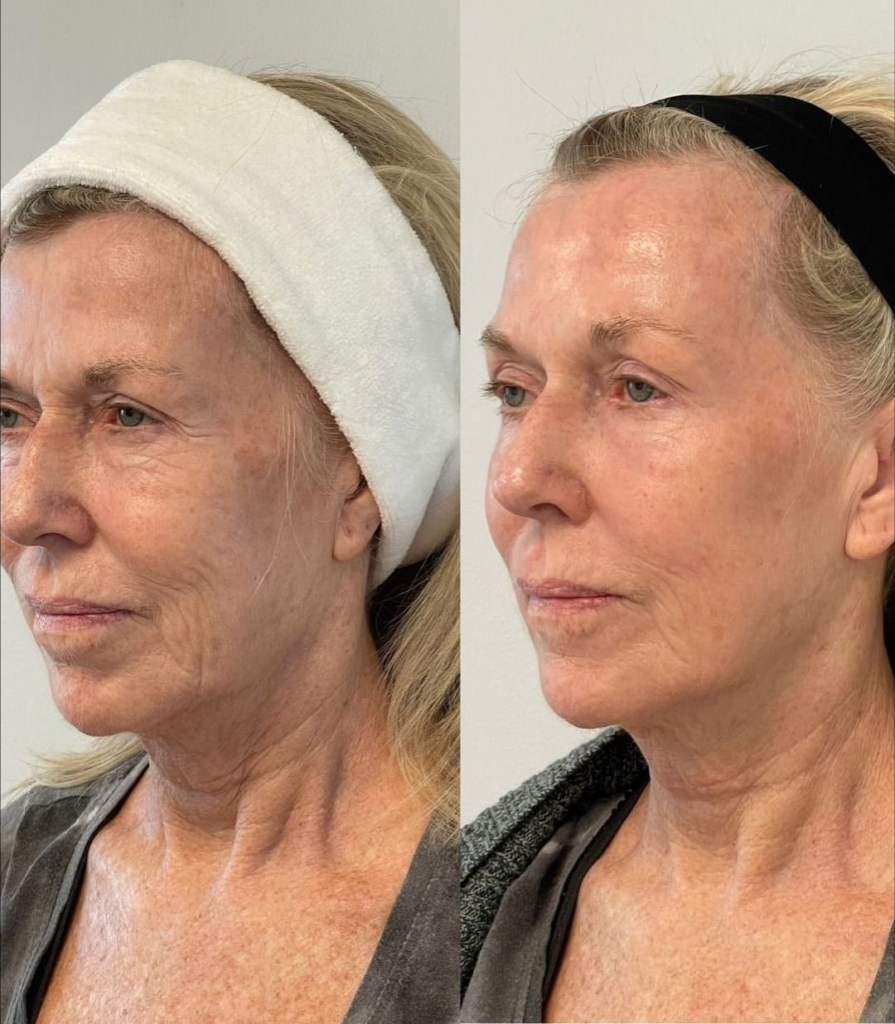
Full Face Rejuvenation is not a one-size-fits-all process. At Stay Ageless Clinic, Full Face Rejuvenation involves working with patients across a wide range of skin profiles, each with its own biology, sensitivities, and response to treatment. Understanding how your skin type interacts with procedures like Microneedling, PRP therapy, Dermal Fillers, and Neurotoxins is not just helpful; it is the foundation of a treatment plan that actually delivers results. Whether your concern is loss of volume, fine lines, uneven texture, or chronic dryness, the way your skin is built will shape every recommendation we make.
Dry Skin: Prioritizing Moisture Before and After Treatment
Dry skin produces insufficient sebum, making the protective lipid barrier thinner than average. This has real implications for procedure selection and aftercare. When we apply Dermal Fillers to someone with significantly dehydrated skin, the tissue does not retain hydration as it should, which can subtly affect how the filler integrates and how long the results are maintained.
For dry skin types, we typically recommend:
- A structured pre-treatment hydration protocol using medical-grade moisturizers to rebuild barrier function before any needling or filler session
- Hyaluronic acid-based fillers, which naturally attract and retain water in the tissue
- Lower-intensity Microneedling sessions initially, allowing skin to adapt without overstressing the barrier
- Careful post-procedure occlusive care to prevent transepidermal water loss during healing
Moisture balance is not a cosmetic concern here; it is a clinical one. Skipping this step can lead to prolonged redness, slower healing, and less satisfying outcomes, even from otherwise well-executed procedures.
Oily Skin: Working With Excess Sebum, Not Against It
Oily skin produces more sebum than the skin needs for normal protection, which tends to result in enlarged pores, a persistent shine, and a higher rate of breakouts. Interestingly, oily skin types often age more slowly because the extra lipids keep the skin more supple over time. However, this same excess sebum creates specific challenges when approaching certain treatments.
When it comes to chemical peels and exfoliating treatments, oily skin tends to respond quite differently from dry skin. Oily skin can generally tolerate stronger acid concentrations because the lipid-rich environment buffers the chemical activity. Dry skin, by contrast, has a compromised barrier that makes it far more reactive to the same concentration; what is a mild peel for an oily skin type could cause significant irritation for someone with dry skin. This is not a minor distinction. It is why we never use a standardized peel protocol for all patients.
For oily skin types undergoing Full Face Rejuvenation, we focus on the following:
- Treatments that regulate sebum activity alongside rejuvenation goals
- Microneedling to address pore size and skin texture without adding occlusive products that can clog pores
- Strategic use of Neurotoxins (such as Botox) to address dynamic lines, which are often less pronounced in oily skin but still relevant for the forehead and periorbital areas
- A Laser Facial to reduce visible pore size and manage sebum-related congestion alongside structural improvements
Sensitive Skin: Managing Reactivity Without Sacrificing Results
Sensitive skin is not a single condition; it is a pattern of heightened reactivity that can stem from rosacea, eczema, contact dermatitis, or a genetically thin stratum corneum. These patients flush easily, react to common topical ingredients, and often have a history of being told they are “too reactive” for many aesthetic procedures.
The truth is that sensitive skin can respond exceptionally well to carefully chosen treatments. PRP therapy, for instance, uses the patient’s own platelet-rich plasma to promote healing and collagen production, significantly reducing the risk of an allergic or inflammatory response. It is one of the most biocompatible treatments available, which is exactly why we frequently recommend it for reactive skin types. A well-calibrated Laser Facial with the right wavelength and energy settings can also be appropriate for sensitive skin; the key is to start conservatively and build from there.
Key considerations for sensitive-skin patients include the following:
- Patch testing before any new topical or in-clinic product is introduced
- Avoiding back-to-back procedures that cumulatively stress the skin’s barrier
- Choosing Neurotoxins like Botox for muscle relaxation without surface-level skin disruption
- Longer recovery windows are built into treatment plans to allow for full resolution before the next session
Combination Skin: Zone-by-Zone Treatment Planning
Combination skin poses a unique logistical challenge because the face behaves like two different skin types at once. The T-zone (forehead, nose, and chin) tends to be oily and prone to congestion, while the cheeks and periorbital area are often dry or even sensitive. Applying a uniform treatment protocol to someone with combination skin is a common clinical mistake that leads to uneven results.
At Stay Ageless Clinic, our approach to combination skin during Full Face Rejuvenation involves careful zone mapping before any procedure begins. We may apply different Microneedling depths across facial zones, place Dermal Fillers with extra attention to hydration in the drier cheek area, and use Botox strategically along the T-zone to moderate oil gland activity. The goal is cohesive overall results while respecting that each region has its own needs.
Mature Skin: Collagen at the Center of Every Plan
Beginning around age 25, the body produces about 1% less collagen each year. By the time patients reach their 50s and 60s, this cumulative loss becomes visible as skin laxity, volume loss, and deeper static lines. The challenge with mature skin is not just surface texture; it is structural. This is where collagen-stimulating procedures make the most meaningful difference.
PRP therapy delivers concentrated growth factors directly into the dermis, signaling fibroblasts to produce new collagen and elastin. When combined with Microneedling, which creates controlled microchannels that drive PRP deeper into the tissue, the results are additive. This combination is particularly effective for mature skin because it addresses the biological deficit at the source rather than masking it.
For mature skin patients, our clinical planning typically includes the following:
- A series of PRP with Microneedling sessions spaced four to six weeks apart to build collagen progressively
- Dermal Fillers to restore volume in the mid-face and temple areas where structural deflation is most noticeable
- Botox to soften dynamic expression lines around the eyes, forehead, and brows without altering natural movement
- A Laser Facial to address pigmentation changes, sunspots, and surface irregularities that accumulate with age
Mature skin also heals more slowly, so we build in extended recovery time and avoid stacking procedures in ways that overwhelm the tissue’s repair capacity.
How Does Stay Ageless Clinic Build Individualized Treatment Plans?
The procedures themselves, including Microneedling, PRP, Dermal Fillers, Neurotoxins, and Laser Facial, are well-established tools. What separates a mediocre outcome from a genuinely satisfying one is how those tools are deployed relative to the individual in front of us. At Stay Ageless Clinic, every Full Face Rejuvenation consultation begins with a thorough skin assessment that considers type, condition, history, and goals. We account for current skincare habits, prior treatments, medications that affect healing, and seasonal factors that influence how skin behaves.
We do not recommend procedures based on what is trending or on a general category of complaint. We recommend based on what your specific skin can tolerate, absorb, and respond to effectively. That distinction is not just a philosophy; it is the difference between a procedure that works and one that falls short of its potential.
If you are ready to understand how your skin type fits into a realistic, medically grounded Full Face Rejuvenation plan, we invite you to schedule a consultation with our team at Stay Ageless Clinic. Every decision we make starts with your skin, not a template.
Client Experience
I came to Stay Ageless Clinic unsure which treatments would actually work for my skin. I have combination skin, with an oily T-zone and dry cheeks, and I have tried different treatments before without consistent results. During my consultation, the team explained how my skin type would respond to each procedure and why a uniform approach would not work for me.
My Full Face Rejuvenation plan included targeted Microneedling, PRP therapy, and carefully placed Dermal Fillers. What stood out was how each step was adjusted based on how my skin reacted over time. The process felt structured rather than rushed.
After a few sessions, I noticed smoother texture, better hydration in dry areas, and more balanced oil production. The results looked natural, and the improvements built gradually. I felt like the plan was designed specifically for my skin rather than following a standard routine, which made a noticeable difference in both the outcome and my confidence.
FAQ
1. How does skin type affect Full Face Rejuvenation results?
Your skin type influences how it responds to treatments like Microneedling, PRP therapy, Dermal Fillers, and Neurotoxins. Factors such as oil production, hydration levels, and sensitivity determine the intensity, frequency, and combination of procedures used.
2. Can sensitive skin safely undergo Full Face Rejuvenation procedures?
Yes, sensitive skin can respond well when treatments are carefully selected. Options like PRP therapy and controlled Laser Facial sessions are often used because they work with your skin’s natural biology and reduce the risk of irritation.
3. What treatments are commonly used for oily skin during Full Face Rejuvenation?
Oily skin often benefits from Microneedling to improve texture, Neurotoxins to manage dynamic lines, and treatments that help regulate sebum production while addressing pore size and congestion.
4. How is combination skin treated during Full Face Rejuvenation?
Combination skin requires a zone-based approach. Different areas of the face are treated according to their specific needs, such as hydration for dry zones and oil control for the T-zone, to achieve balanced results.
5. Why is collagen stimulation important for mature skin?
Mature skin experiences a natural decline in collagen production over time. Treatments like PRP therapy and Microneedling help stimulate collagen, improving skin structure, elasticity, and overall appearance gradually.