
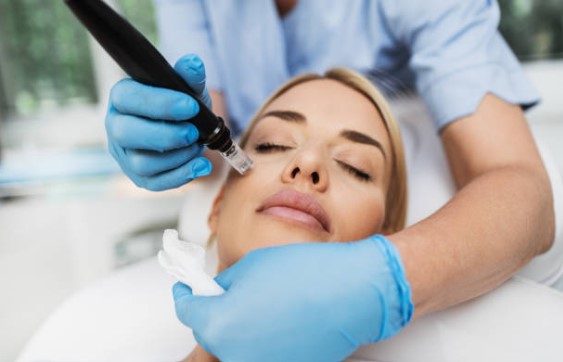
The clinical application of Microneedling relies on the body’s innate ability to repair dermal structures through controlled physical signaling. Microneedling activates a regulated wound-healing cascade that stimulates fibroblast activity and collagen remodeling within targeted layers of the skin. At Stay Ageless Clinic, we utilize this modality to address various cutaneous concerns by triggering a precise biological response within the extracellular matrix. By understanding the cellular mechanics involved, we can better appreciate how this procedure manages pore architecture and increases dermal density without relying on invasive surgical measures.
The Science of Micro-channel Formation
Collagen Induction Therapy (CIT) works by making thousands of tiny, vertical holes in the epidermis and dermis. These micro-channels start the whole process of regeneration. When we use the specialized needle cartridge, the mechanical action goes around the stratum corneum, which is the main barrier of the skin, without destroying the tissue.
This injury is planned and controlled. We do not remove large areas of the skin surface like older resurfacing methods do. Instead, we keep the epidermis intact and tell the deeper layers to start repairing themselves. These micro-channels also work as a way to deliver topical agents. During a session at Stay Ageless Clinic, we take advantage of this short-term increase in skin permeability to let bioactive substances like hyaluronic acid or growth factor serums get deeper into the skin, where they would otherwise stay on the surface.
Activating the Wound Healing Cascade
As soon as the micro-channels are formed, the body starts the three-phase wound healing process right away. This sequence is a strict biological need for changing the structure of tissues. We focus on these stages to achieve a functional improvement in skin quality:
Phase I: Inflammation
After the procedure, platelets release clotting factors to stop any small bleeding right away. During this stage, a number of important growth factors are released, such as TGF-alpha and TGF-beta (TGF-$\alpha$ and TGF-$\beta$). These proteins are chemical messengers that bring neutrophils and macrophages to the area. We see this clinically as mild erythema, which means that the cells are communicating with each other and are ready to heal.
Phase II: Proliferation
During this phase, fibroblasts, the cells that make collagen, start to divide. We observe the development of novel intracellular matrix components and the proliferation of new blood vessels, a phenomenon termed angiogenesis. The fibroblasts put down Type III collagen, which gives the new tissue a flexible structure. This step is very important for building the “scaffolding” that holds up the skin’s surface.
Phase III: Remodeling
The final phase involves the maturation of the newly formed tissue. The Type III collagen is replaced by the stronger Type I collagen over the course of several months. This change is what makes the dermis tighter and thicker. By repeatedly stimulating this cascade through Microneedling, we create a cumulative effect that builds a denser, more resilient skin structure.
Pore Dynamics and Collagen Contraction
A frequent clinical aim is the minimization of enlarged pores. To comprehend how this is accomplished, we must examine the structural support encircling the pore opening. When the skin around pores loses its elasticity and starts to sag, the pores look bigger. This is called “pore laxity.”
When we make new collagen, the matrix gets smaller, which pulls the edges of the pore tighter. The collagen is like a drawstring. As the fibers get more organized and thicker, they make a strong “cuff” around the opening of the follicle. This higher tension in the skin makes the pore look smaller from the inside out. We have found that this structural method works better in the long run than temporary topical astringents because it fixes the skin’s support system when it breaks down.
Strategic Integration with Other Modalities
CIT is a strong procedure on its own, but we often talk about how it works with other clinical interventions. A Laser facial, for example, can help with pigmentary problems or redness in blood vessels that Microneedling might not be able to fix completely. We cover a wider range of skin health by using both light-based energy and mechanical stimulation.
We use needles to focus on the texture of the skin and the size of the pores. To fix volume loss in the mid-face or lips, we use other methods. Patients who want lip fillers often find that CIT improves the texture of the skin around the mouth, which leads to a better overall result. We want to keep a balanced facial profile where the skin quality matches the volume of the underlying structure.
Clinical Safety and Controlled Parameters
We put sterile technique and the right needle depth at the top of our list. These parameters lower the risk while still providing good stimulation. The depth of the needle changes based on where it is in the body and how thick the skin is.
Microneedling depends on mechanical accuracy. We do not put too much pressure on people, which could cause unnecessary trauma. Controlled passes make it possible for collagen to be made evenly across the treatment area.
Long-Term Dermal Remodeling
Repeated sessions cause collagen to build up over time. Every treatment builds on the remodeling that came before it. Over time, the density of the skin increases, and the pores become less visible.
We see collagen induction as an investment in structure. We do not just rely on temporary swelling; we encourage long-term tissue reorganization. This method is in line with clinical goals that focus on fixing the body.
Role of Growth Factors in Texture Improvement
During the healing cascade, growth factors are released that control the growth of keratinocytes. This activity speeds up the turnover of the epidermis. As surface cells die and new ones grow, the texture gets more even.
We stress that signaling from growth factors is key to collagen induction. The treatment activates biological pathways that control the healing of tissues. This controlled response helps the skin’s structure get better.
Collagen Induction Therapy is a way to get the skin to restructure by making micro-channels and controlling the healing process. At Stay Ageless Clinic, we help reduce pore size and increase dermal density by encouraging fibroblast activity and collagen contraction. The process relies on biological repair rather than artificial augmentation. We focus on long-term tissue stability and better pore architecture by using structured treatment intervals and carefully combining them with other procedures.
