
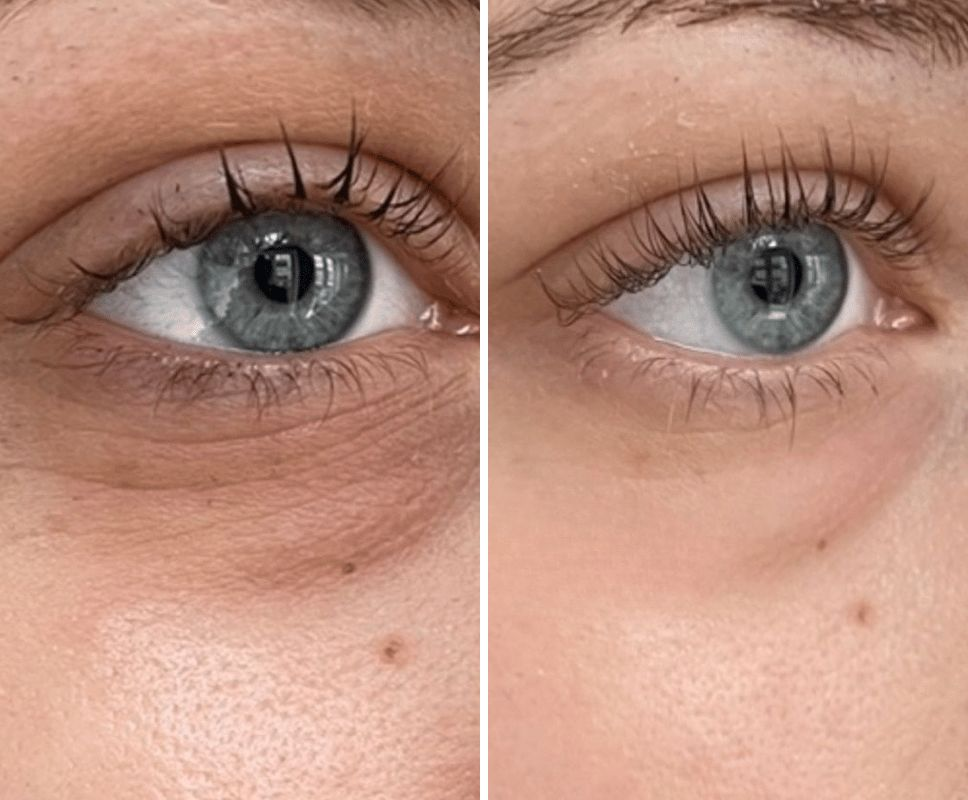
The clinical management of Eye Hollowness requires a nuanced understanding of the transition between the thin preseptal skin and the thicker malar tissues. Eye Hollowness involves more than a surface-level concern, requiring attention to underlying anatomical structures and tissue changes. As we analyze the periorbital complex, we must recognize that this area is not merely a surface-level concern but a multi-layered anatomical challenge dictated by ligamentous attachments and fat pad migration.
Pathophysiology of the Periorbital Orbit
The main reason for the hollowed look is that the orbicularis retaining ligament and the tear trough ligament have become weaker. These osteocutaneous anchors create a point of tension that does not move. A negative vector is made when the sub-orbicularis oculi fat above it shrinks or falls because of gravity, and the maxillary and zygomatic landmarks lose bone over time.
We can see that the orbital septum gets weaker over time, which makes the orbital fat look like it is herniating. This bump makes a shadow in the nasojugal groove, which makes any hollowness in the eye stand out even more. We look at this from a mechanical point of view at Stay Ageless Clinic to see if the deficit is a real loss of volume or just a shadow made by a nearby prominence.
The Role of Bone Resorption
The soft tissue is held up by the underlying skeleton. As you get older, the medial and lateral orbital rims get smaller. Moving the bony foundation back like this makes it less stable for the lower lid structures. Without this structural support, the soft tissue collapses inward, making deep grooves look worse and making Eye Hollowness a lot worse.
Ligamentous Tethering
The TTL starts in the maxillary periosteum and ends in the skin, making a physical barrier between the eyelid and the cheek. This tethering becomes clearer as the malar fat pad drops. The anatomical foundation of the tear trough defect is the resultant step-off deformity. To fix this tethering, we need to put the product in the deep supraperiosteal plane to give it a mechanical lift.
Material Science of Dermal Fillers
When choosing an injectable for this sensitive area, we need to put rheology first. The best material should have a low $G’$ (elastic modulus) so that it doesn’t feel like anything is under the thin skin of the eyelid, but it should also be strong enough to stay in place.
The hydrophilic properties of the cross-linked hyaluronic acid chains are what make our selection of dermal fillers at Stay Ageless Clinic. In the area around the eyes, high-swelling HA can cause chronic puffiness or the Tyndall effect. So, we use products that don’t absorb much water to make sure the correction of the infraorbital groove is stable and predictable.
Rheology and Tissue Integration
The material must be integrated into the tissue planes. If a filler is too cohesive, it may look like a “sausage” along the edge of the eye. It will not give the right projection if it’s too fluid and will flow into the malar space. By balancing these mechanical properties, we can reduce Eye Hollowness by making the transition from the lid to the cheek smooth.
Cross-Linking Technology
The durability and safety characteristics of the selected material are contingent upon the employed cross-linking technology. High-concentration HA with too much cross-linking may cause an inflammatory response that takes longer to happen. We like materials that naturally integrate well and are strong enough to resist enzymatic breakdown, so that the corrective effect lasts for twelve to eighteen months without major migration.
Integrating Neuromodulators and Fillers
Volume replacement is the main part of treatment, but we also need to think about how the orbicularis oculi muscle moves. Hyperactivity of the lateral fibers can make you look more tired. By using Botox in a smart way, we can relax the muscle fibers that make “jelly rolls” or fine dynamic lines, which makes the skin a better place for dermal fillers to be put on later.
This dual-modality method deals with both the static volume deficit and the dynamic mechanical pull of the muscles. We find that combining these treatments works better than just treating volume, especially when the patient has a deep tear trough and a lot of crow’s feet.
Synergistic Effects
Botox reduces the sphincteric action of the orbicularis oculi, which in turn reduces the mechanical stress on the filler material. This maintenance of the material’s position aids in achieving a more enduring clinical result. Also, relaxing the depressor muscles of the brow can indirectly help relieve the tension across the upper eyelid, making the area around the eyes look more balanced.
Managing Edema and Lymphatic Drainage Post-Treatment
The area around the eyes has a lot of blood vessels and a complicated lymphatic system. Any disturbance in this region, whether due to needle injury or the introduction of a hydrophilic foreign entity, can hinder fluid elimination.
Understanding Post-Procedural Swelling
The filler material, putting pressure on the local lymphatic channels, is what usually causes swelling in the lower eyelid. This is especially common when the material is put on too lightly or in too large amounts. We recommend a cautious approach, often “under-correcting” the problem during the first session to let the HA naturally absorb water.
Clinical Protocols for Fluid Clearance
To support lymphatic drainage, we recommend:
- Deep Supraperiosteal Placement: Minimizes interference with the superficial lymphatic plexus.
- Micro-cannula Techniques: Reduce trauma to the vasculature compared to sharp needles.
- Cold Compression: Regulates local blood flow immediately following the procedure.
At Stay Ageless Clinic, we stress the importance of teaching patients about morning puffiness because sleeping on your back can cause temporary fluid buildup around the newly placed material.
A Multi-Vector Strategy
To fix eye hollowing, you need to know a lot about the layers of the body and be very precise with materials. By learning about the mechanical problems with the ORL and the resorption of the malar bone, we can better choose the tools, like specialized hyaluronic acid gels or neuromodulators, to fix the periorbital unit. The success of this procedure is not determined by the amount of volume added, but rather by the restoration of a smooth transition between the lower eyelid and the midface.
